
Archaeological · Hama
Apamea
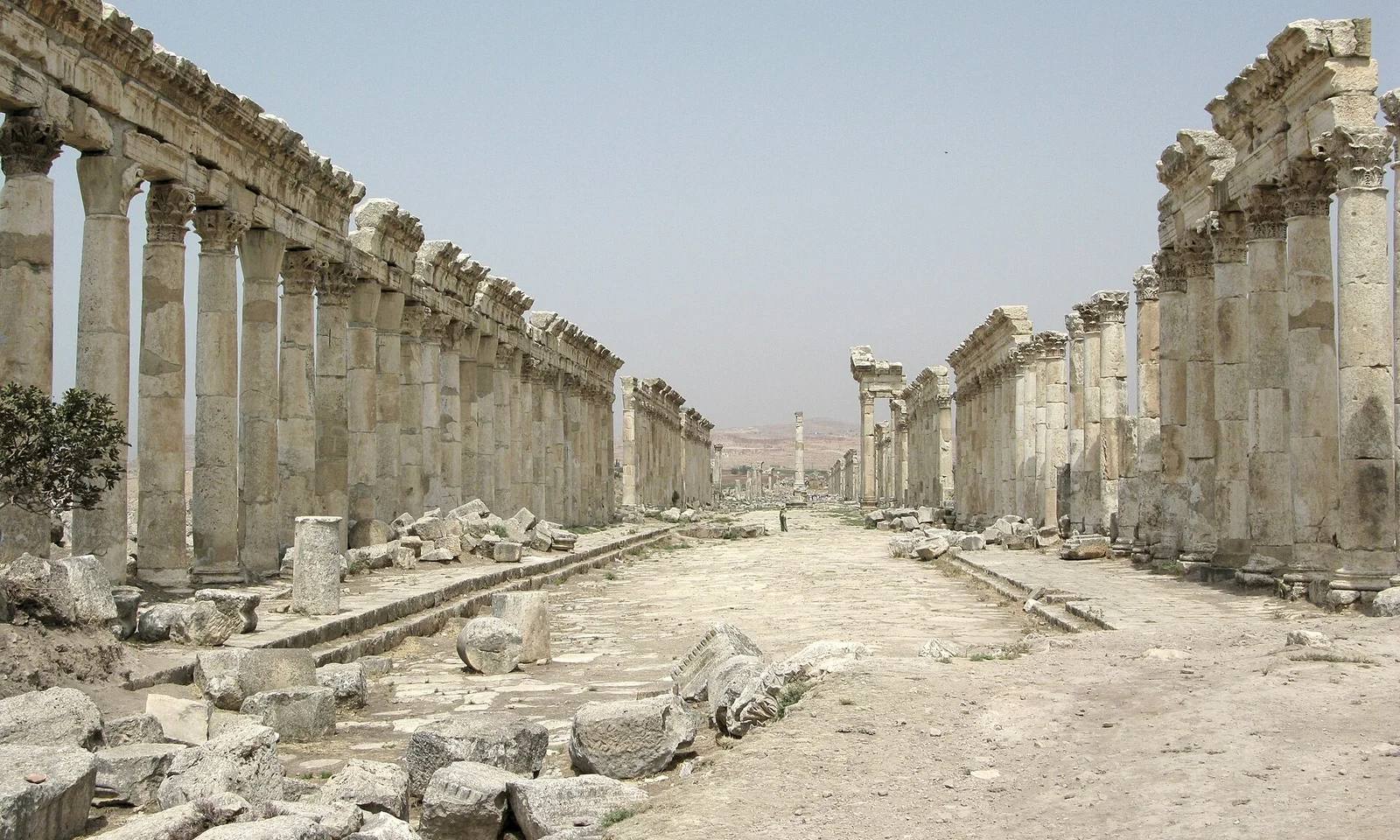
Founded as Pella c.320 BC, refounded c.300 BC by Seleucus I as Apamea — ~2 km Great Colonnade among the Roman world's longest, theatre >20k, destroyed 1152 earthquake; Tentative List 1999.
- Type
- Archaeological
- City
- Hama
- Visiting tips
- 6 tips
- Updated
- 30 August 2026
History
History
Founded as Macedonian Pella c.320 BC after Triparadeisos and refounded c.300 BC by Seleucus I Nicator as Apamea after his wife Apama, the city on the Orontes loop became a major Roman metropolis on the fertile Ghab plain.
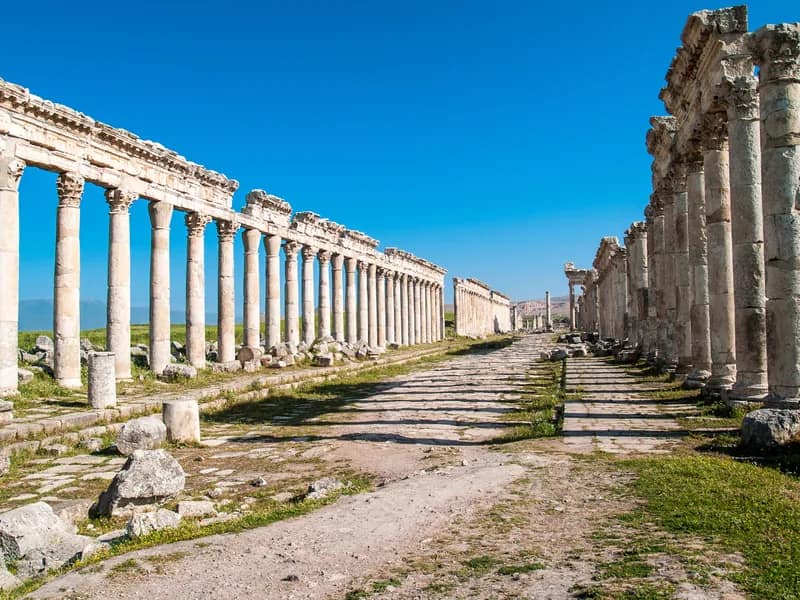
Its defining monument is the Great Colonnade (cardo maximus, ~2 km, one of the longest in the Roman world), rebuilt after the 115 AD Antioch earthquake under Trajan/Hadrian and modified under Justinian; the restored columns were re-erected in the 20th century. The city also held a theatre for >20,000 and rich villa mosaics.
Sacked by Khosrow I in the 6th century and destroyed by the 1152 earthquake, Apamea faded to a vast field of fallen and restored columns heavily looted after 2011. Qalaat al-Madiq on its mound surveys the plain; the site is on Syria's UNESCO Tentative List since 1999.
Visiting tips
Before you go
- 1
Walk the great colonnaded street end to end — the long rows of columns are one of the most impressive sights in the Levant.
- 2
Look for the surviving floor mosaics in the remains of houses and the cathedral, often best seen with a guide.
- 3
Visit the on-site museum at the entrance, which holds notable mosaics and sculpture from the city.
- 4
Climb the Qalaat al-Madiq mound nearby for a panoramic view over the plain and the colonnade.
- 5
Allow two to three hours; the site is exposed, so bring sun protection and water.
- 6
Conditions change: ask your hotel or our team in Damascus for the latest on access before you go.
On our tours
Tours that visit Apamea
Nearby in Hama
More to see and do
More sights nearby
Destinations
Ready to explore Hama?
Request a hotel quote for Hama and plan your trip with our local team.