
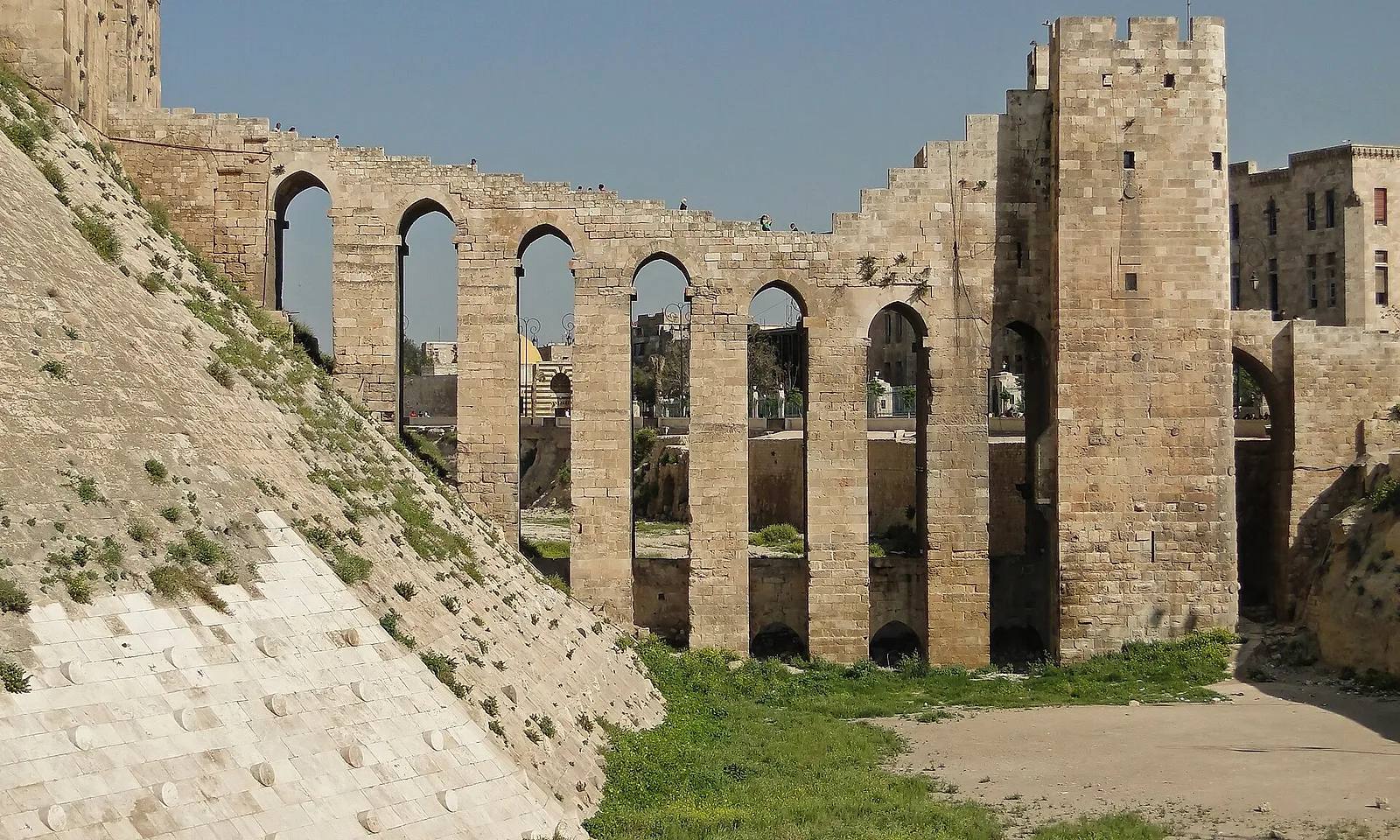
Castle · Aleppo
Aleppo Citadel
Part of Ancient City of Aleppo UNESCO 21 (1986, Danger since 2013; 364 ha; criteria iii, iv) — hill fortified since 3rd millennium BC, standing Ayyubid fortress 12th–14th c. with ditch, glacis, palace of al-Zahir Ghazi.
- Type
- Castle
- City
- Aleppo
- Visiting tips
- 6 tips
- Updated
- 30 August 2026
History
History
The citadel hill has been fortified since at least the 3rd millennium BC.
Ancient City of Aleppo (UNESCO 21, 1986; Danger since 2013; 364 ha; criteria iii, iv) sits at the crossroads of trade routes since the 2nd millennium BC, successively Hittite, Assyrian, Greek, Roman, Umayyad, Ayyubid, Mamluk and Ottoman. Its Outstanding Universal Value lies in the cohesive urban fabric around the citadel: remains of Hittite/Hellenistic/Roman/Byzantine/Ayyubid layers in the Citadel, the Great Mosque founded under the Umayyads and rebuilt in the 12th c., Madrasa Halawiye incorporating Aleppo's former Christian cathedral, plus suqs, khans and mosques that made it one of humanity's richest cities.
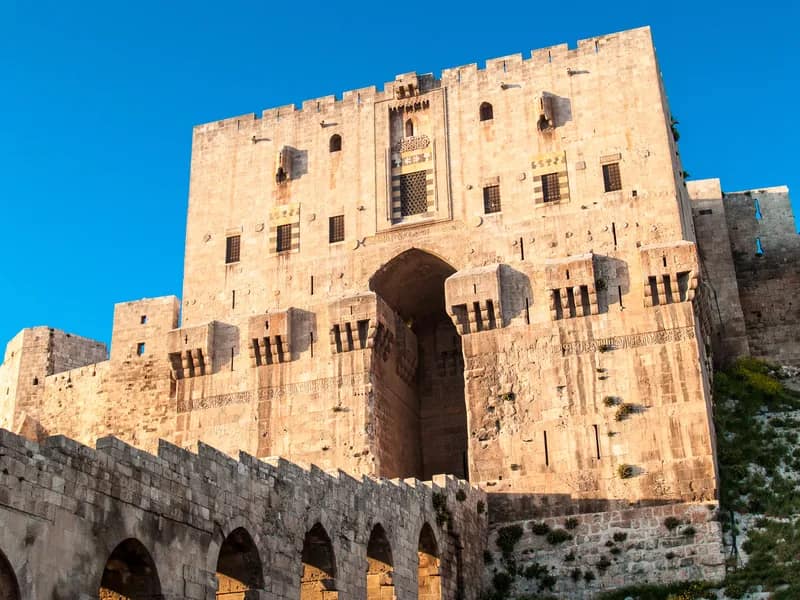
The citadel hill has been fortified since at least the 3rd millennium BC. The standing ensemble is Ayyubid 12th–14th c. at the height of Arab dominance after Salah al-Din's success against the Crusaders: encircling ditch and defensive wall above a massive sloping stone-faced glacis, great gateway with machicolations, palace of al-Zahir Ghazi, great towers and stone entry bridge of the 13th–14th c., and 6th-c. Christian remnants within. The walled city retains its early Graeco-Roman street layout and medieval walls and gates, with three extra-muros quarters (Bab al-Faraj, Jdeide) holding Ottoman palaces and religious buildings.
Inscribed 1986, the property suffered damage after 2011 and is protected by Antiquities Law 222 under DGAM with the Municipality's Directorate of the Old City (est. 1999) and the Sustainable Urban Development Programme; fundamental changes (demolitions, tall hotels, road widenings) before inscription had already impacted visual integrity. Restoration is staged street by street — check locally for scaffolding. UNESCO notes traditional handicrafts and commerce remain the vital sustaining component of the city's life.
Visiting tips
Before you go
- 1
Cross the moat and climb the monumental stone ramp to the entrance gateways — a dramatic approach designed to impress and defend.
- 2
Explore the Ayyubid palace, its audience halls, and the underground passages beneath the fortifications.
- 3
Allow a couple of hours; the walkways around the walls offer broad views over the Old City and its souqs.
- 4
The site is exposed and sunny — wear comfortable shoes, a hat, and carry water.
- 5
Check current access locally, as parts of the monument may be closed during ongoing restoration.
- 6
Conditions change: ask your hotel or our team in Damascus for the latest on access before you go.
Plan your visit
Visiting Aleppo Citadel
Getting there
In the centre of the Old City of Aleppo, above the old souqs. Aleppo is about 350 km from Damascus, around 4 hours by car.
Best time to go
Spring and autumn. The site is exposed and sunny: bring a hat and water, and allow a couple of hours.
On our tours
Tours that visit Aleppo Citadel
Questions
Questions about Aleppo Citadel
Planning a visit? Ask us for the tour or the car that fits your dates.
Chat on WhatsAppNearby in Aleppo
More to see and do
More sights nearby
Experiences in Aleppo
- Aleppo Citadel & al-Madina SouqWalk the great citadel, the Great Mosque and the stone-vaulted souqs of Aleppo, a trading crossroads for over three thousand years.
- Aleppine cuisine tastingKibbeh in a dozen forms, cherry kebab, muhammara, and pistachio sweets — a taste of the city famous for its hospitality.
- Serjilla & al-Bara: the Dead CitiesWander the ruined stone villages of Serjilla and al-Bara and visit the church of St Simeon, a whole landscape of Roman and Byzantine life left standing.
Destinations
Ready to explore Aleppo?
Request a hotel quote for Aleppo and plan your trip with our local team.